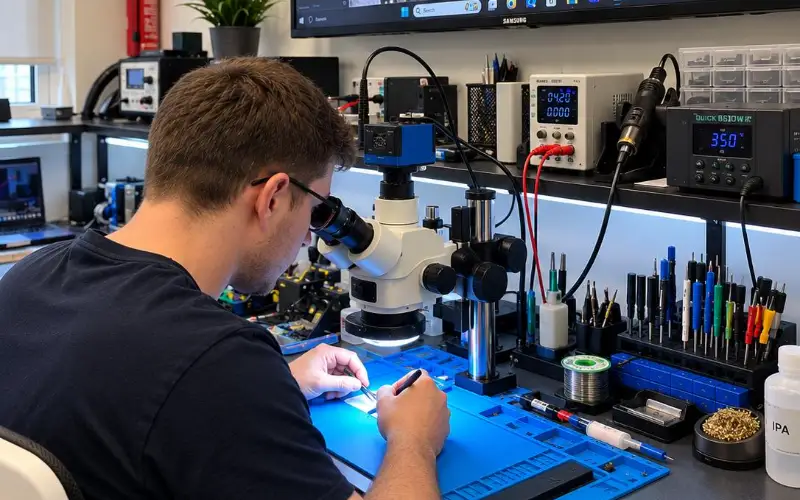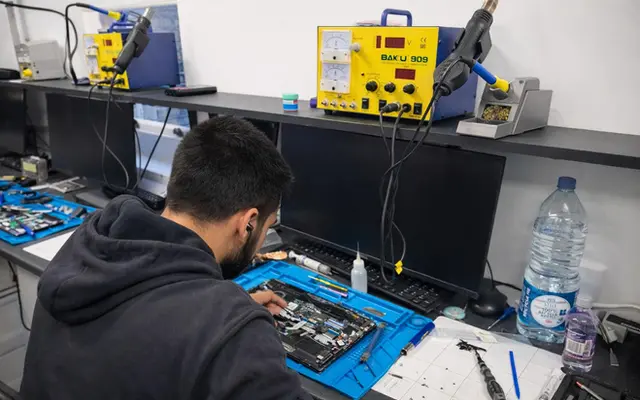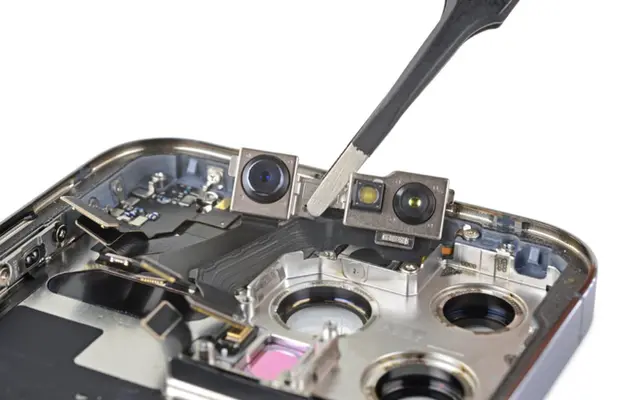
People join repair courses for very different reasons. These are the paths we see most often, and what each one needs.
A job as a technician
Shops and service centres need people who can diagnose, repair and talk to customers. A certificate shows you trained. A tidy repair in front of the employer shows you can do it. We can refer students to companies we work with, but we cannot guarantee a job.
Extra income next to your job
Evening or weekend repairs for people you know are a gentle start. Costs are low, and you find out if you like the work before changing anything bigger.
A repair business
The skill is portable and the starting point can be small: some tools, a workspace and good parts. From there repairers often add:
- Accessories, such as cases and screen protectors
- Buying, repairing and selling used phones
- Repairs for local companies
- Laptops and tablets
An extra service for an existing shop
If you already sell phones, accessories or computers, repairs bring people back to your counter.
A step up for repairers
Technicians who change screens all day often want harder work. Micro soldering is the usual next level.
What is good about this trade
- You can learn the basics in a short time compared with a degree
- It is practical, so you see your result the same day
- Repairing keeps devices in use and reduces electronic waste
- You can use the skill in many countries
What is less easy
- Models change, so learning never finishes
- A mistake can damage someone’s phone
- Income is not fixed when you work for yourself
If one of these paths sounds like you, see our courses and the levels they cover.
Not sure where you fit? Our 30-second course finder asks four quick questions, or you can call or WhatsApp +44 20 7101 4446 and tell us what you have repaired so far.