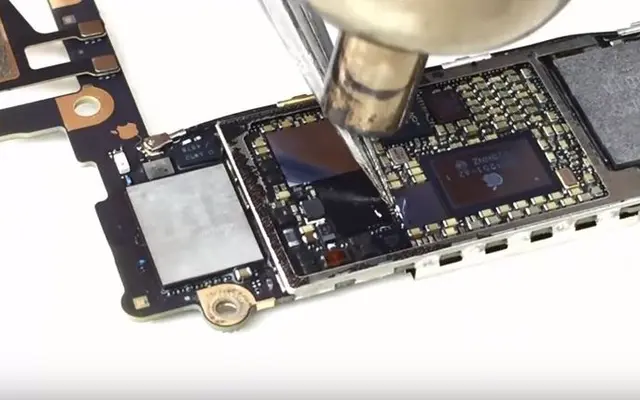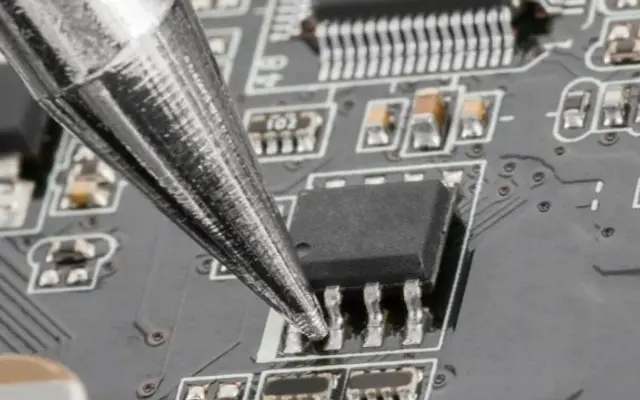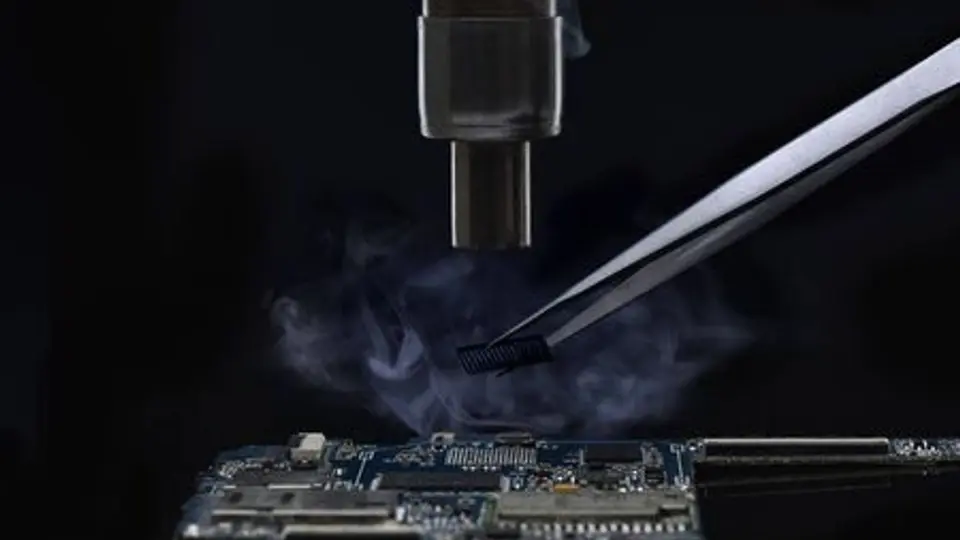
In a board swap, the main circuit board of a device is replaced to solve a fault that ordinary part changes cannot fix. It is precise work, and a good test of everything a repairer has learned.
When repairers consider it
Usually after simpler explanations have been ruled out. A device that stays dead with a good battery, screen and charging port may have a board problem. Diagnosis comes first: some boards can be repaired, and then a swap is not needed.
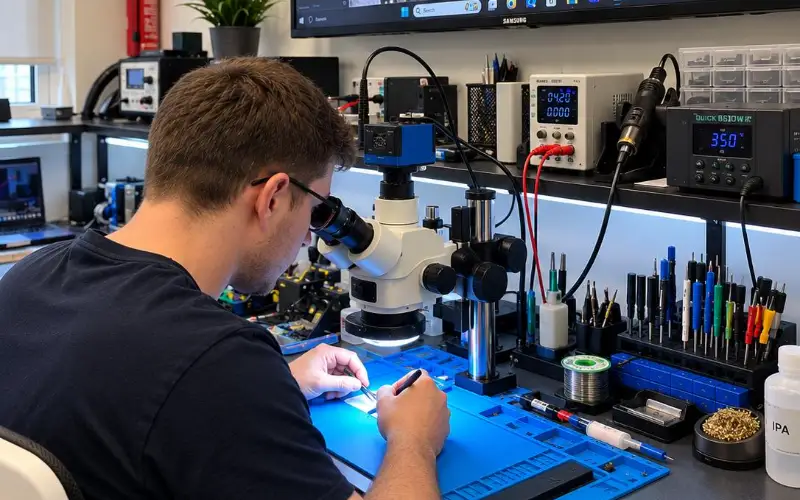
The bench you need
- Soldering iron and hot air rework station
- Magnification, ideally a microscope
- Multimeter
- Anti-static mat and wrist strap
- Precision screwdrivers and opening tools
- Cleaning materials for boards and connectors
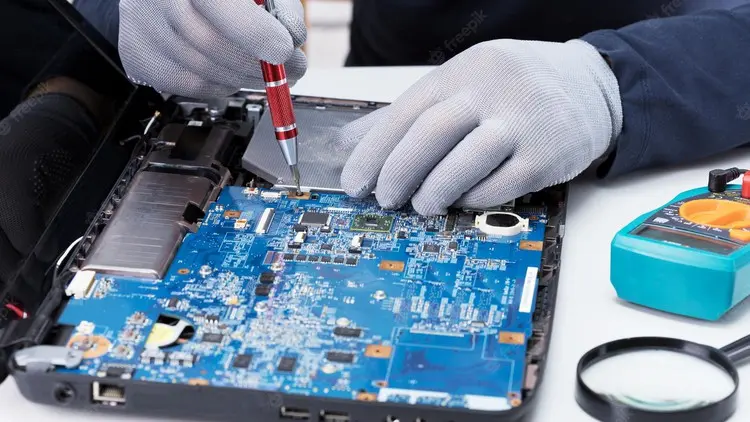
Techniques to practise
- Open and record. Photograph each stage and keep the screws in order.
- Remove the board. Every connector, shield and hidden screw first, then lift without bending.
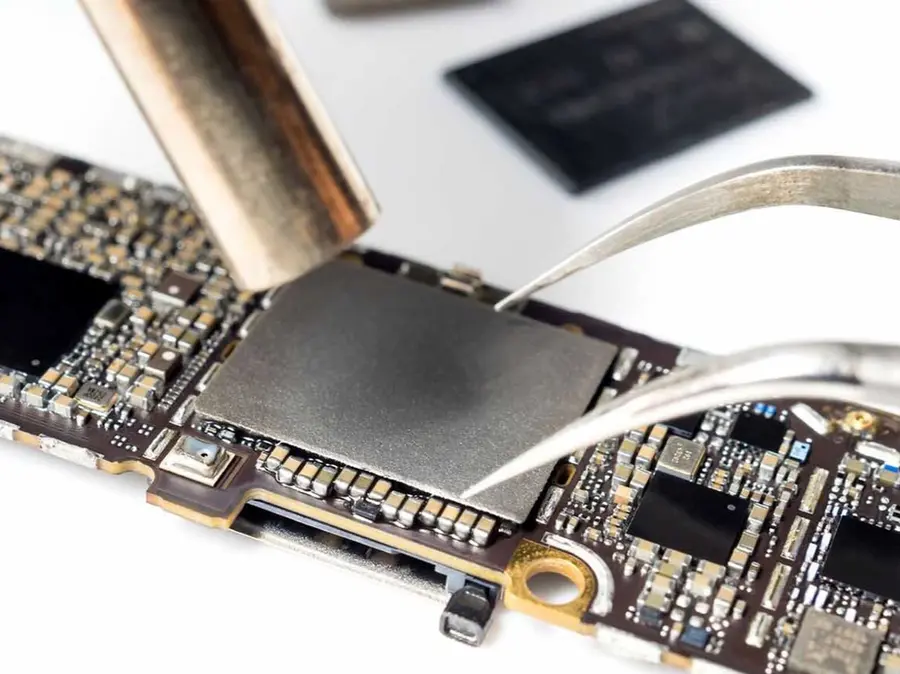
- Solder and desolder cleanly. Enough heat, for as short a time as possible.
- Clean. Old flux and dirt cause new faults.
- Fit and test. Charging, display, cameras, sound and signal, before the device is closed and again after.
Habits that help
- Begin with old devices that have no value
- Change one thing at a time when you test
- Keep notes of readings, not only photos
- Ask early when something looks wrong
- Leave space on the bench, because small parts disappear
What it can do for you
For a technician, board skills show employers that you can handle more than screens. For a shop, they mean fewer jobs refused. For someone changing career, they are a goal to aim for after the basics.
Training with us
Board-level work belongs to Level 3. Experienced repairers can choose Micro Soldering & PCB Repair or the shorter Fast Track. If you are starting out, Mastery takes you through Levels 1 and 2 first.
Not sure where you fit? Our 30-second course finder asks four quick questions, or you can call or WhatsApp +44 20 7101 4446 and tell us what you have repaired so far.