It depends on the course, and on what you want to do after it. These seven checks work for any school, including ours.
1. Whose hands do the repair?
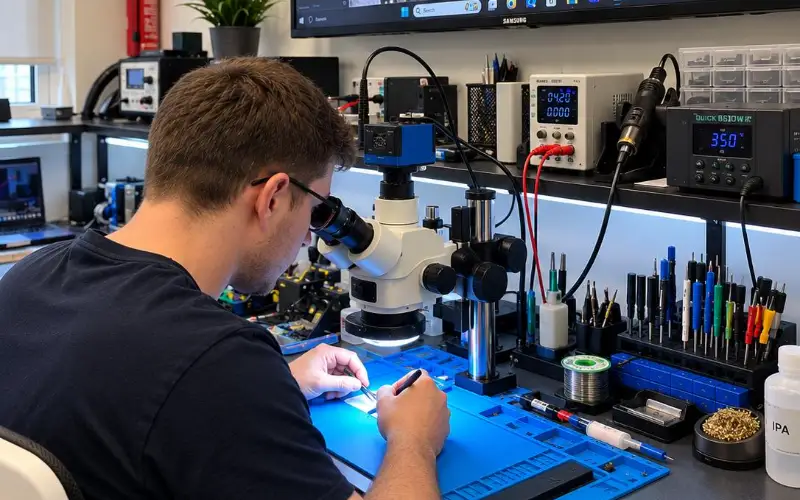
Ask how the day is divided. If the trainer repairs and you watch, you are paying for a live video. Our practical courses are about 80% hands-on.
2. How long would you wait for help?
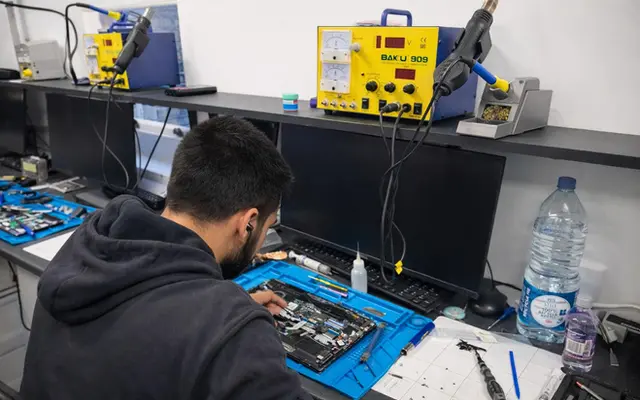
Divide the number of students by the number of trainers. We keep in-person classes to six students at most.
3. Is it your level?
- Never repaired a phone: Smartphone & Tablet Repair Mastery
- Interested in computers: Laptop, PC & MacBook Repair
- Already repairing and ready for boards: Micro Soldering & PCB Repair or Fast Track
- Want to improve your diagnosis from home: Live Online Diagnostics, 8 to 11 February on Zoom
4. What happens the week after?
That is when you meet a fault nobody showed you. Find out if you can ask the trainers. We give unlimited support after the course, and a free retake within 6 months, subject to space.
5. What does the certificate say?
A certificate shows customers and employers that you trained. Ask for its exact name and what it covers. Ours is given when you complete the course.
6. Are the income claims honest?
Be careful with big numbers. Starting pay for technicians is often modest, and there is little published data. Skills that other shops do not have, such as micro soldering, can open more doors, but nobody can promise you an income. Ask any school what past students went on to do.
7. How can you pay?
Training is a real cost. Ask about deposits, instalments and refunds, and read the terms. With us, a £100 deposit holds a place if you book early, and Klarna is available on most courses, subject to approval.
If the answers look good, compare our courses and the next dates.
Not sure where you fit? Our 30-second course finder asks four quick questions, or you can call or WhatsApp +44 20 7101 4446 and tell us what you have repaired so far.