New flagship phones can cost more than £1,000, so many owners would rather repair the one they have. That is what makes phone repair a practical small business: the need is easy to understand, and you can begin on a small scale. You do not need a degree. You do need skill, sensible equipment and a way for people to find you.
Know who you want to serve
“Everyone with a phone” is too wide to plan for. Choose one or two groups first:
- Students and young workers want it fixed today.
- Families bring phones and tablets with broken screens.
- Small companies lose working time when a phone or laptop fails.
- Owners of older phones would rather pay for a battery than a replacement.
All of them care about the same three things: how fast, how much and whether you stand behind the work.
Build skills in the right order
- Screens and batteries on popular iPhone and Android models
- Charging ports
- Diagnosis, so you replace the part that failed and not the part you guessed
- Liquid damage: checking and cleaning
- Micro soldering, for motherboard faults other shops refuse
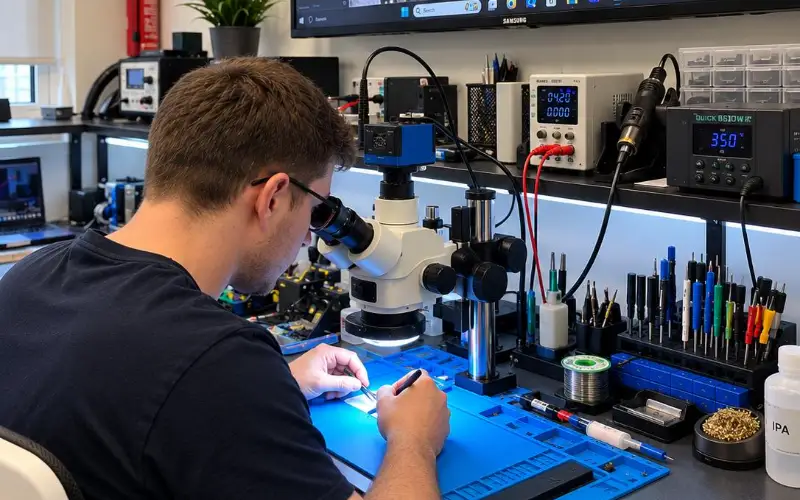
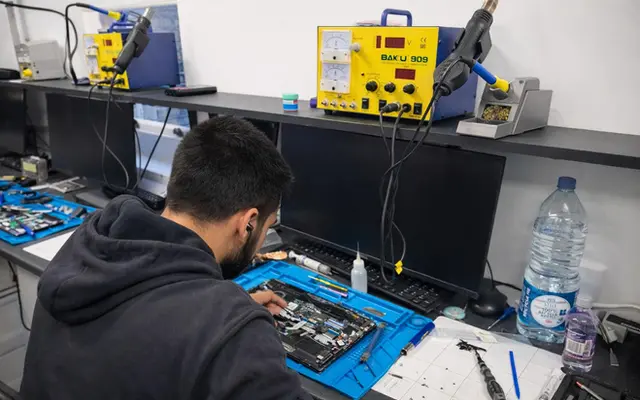
For tools, plan for precision screwdrivers, opening tools, a heat station, a soldering station, a multimeter, a microscope and parts from a supplier you trust.
Four ways to begin
- At home: cheapest to start. Think about parts, tools and how customers hear about you.
- Travelling to customers: convenient for them. Think about travel time and what you carry.
- A stall or kiosk: people walk past every day. Think about pitch fees, stock and hours.
- A shop: most room to grow. Think about rent, business rates, insurance and staff.
Moving from the first to the last in steps is normal. Register with HMRC, arrange suitable insurance and check the current rules on GOV.UK.
Mistakes that cost new repairers
- Learning only from videos and practising on a customer’s phone
- Buying the cheapest screens and batteries, then seeing them come back
- Offering no warranty
- Setting prices so low that there is nothing left to grow with
- Having no Google Business Profile, when most people search before they visit
Learn from people who do it
Our teachers run their own repair shops in central London. On top of the repairs, they explain how they price jobs, choose parts suppliers, win customers and set up a business at home, on the move or in a shop. We have 15 years of experience, take six students at most in a class and give unlimited support after the course. Students rate us 4.9 stars on Google and Facebook.
Compare courses and prices or read our step-by-step guide for London.
Common questions
Do I need experience?
No. Beginners can learn the main repairs with good training and regular practice.
How long does it take to learn?
Screens and batteries come fairly quickly. Micro soldering needs much more practice.
Which skill is the most valuable?
Micro soldering, because fewer repairers can do it.
Can you promise I will earn a certain amount?
No. Results depend on you, your area and your customers, and we cannot promise any income.